
Why Classic Open Plan Living Is No Longer Enough, and How Smart Zoning Keeps Space Open
Is classic open-plan living no longer enough? Discover how smart zoning, glass partitions, furniture layout, and layered lighting create a clearer, calmer, more functional home.
Open-plan living has been the default answer for contemporary homes for years. The promise was easy to understand: more light, better flow, and a stronger sense of spaciousness. In reality, though, a fully open room often comes with practical downsides, from noise travelling too easily to a lack of privacy and a constant overlap between cooking, working, relaxing, and hosting.
That is why more design and architecture publications are now discussing a shift from the fully open layout toward a more nuanced approach, often described as broken plan or smart zoning. Dezeen defines it as dividing interiors into zones for different activities and privacy levels without returning to completely enclosed rooms. Homes & Gardens and Houzz echo the same idea: spaces feel better when they are subtly defined instead of left visually undirected.
What smart zoning actually means
Smart zoning is not about chopping a home into smaller rooms, and it is not about losing natural light. It is about giving each function a clearer identity by using elements that guide how the eye reads the room and how people move through it. That might mean a glass partition, a carefully placed sofa, a rug that anchors the living area, or layered lighting that gives the dining area its own presence.
The goal is simple. The interior still feels open, but it no longer feels vague. When zoning is handled well, a home becomes calmer, more coherent, and far easier to use every day.
Why the classic open plan no longer solves everything on its own
This shift is not just stylistic. It reflects the way we now live at home. Our interiors are expected to support focus, downtime, entertaining, practical routines, and sometimes work, all within the same footprint. Homegirl London points out that homeowners increasingly want more privacy, acoustic comfort, and flexibility, which helps explain why zoned interiors are gaining momentum.
In a fully open room, all those needs tend to collide. The kitchen visually spills into the living area, the dining area can feel like leftover circulation space, and every activity affects the atmosphere of the whole room. Smart zoning does not reject openness, it edits it.
Four ways to define space without closing it off
1. Glass partitions and transparent dividers
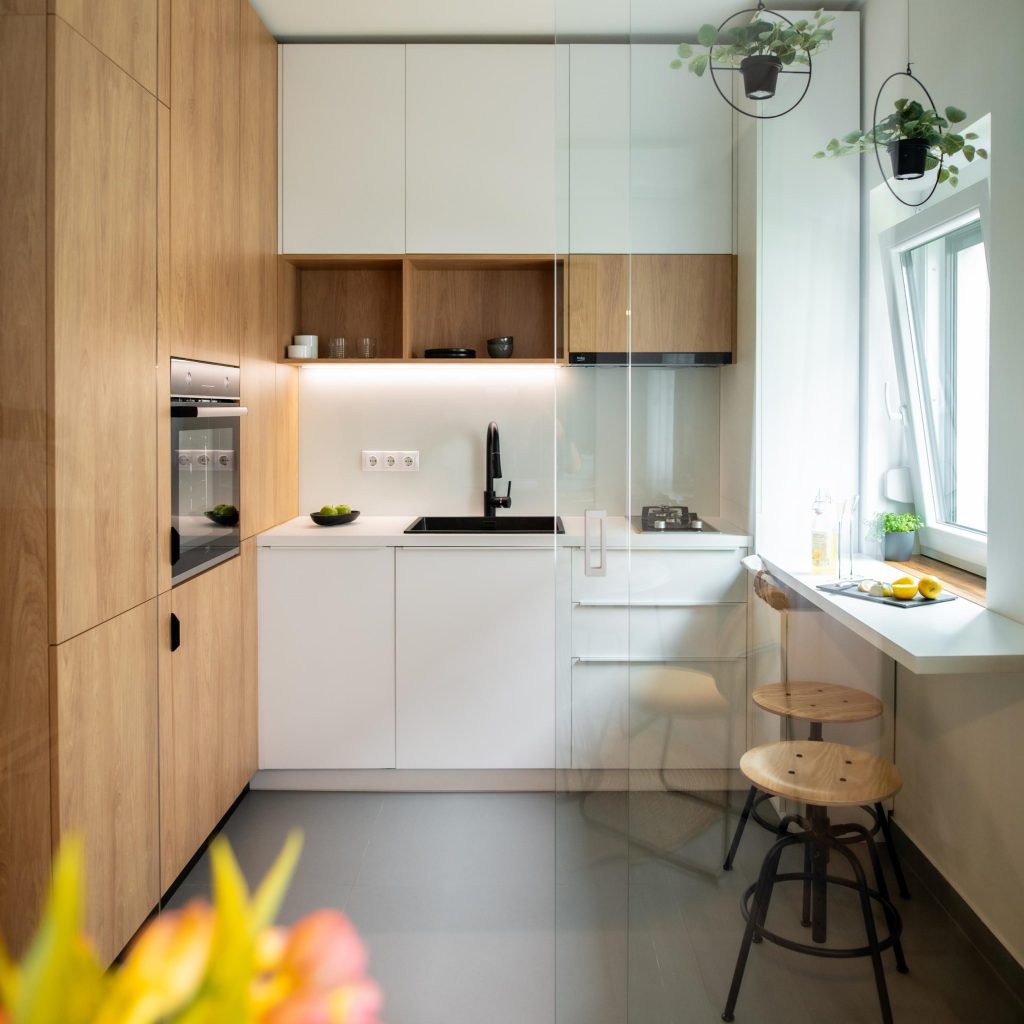
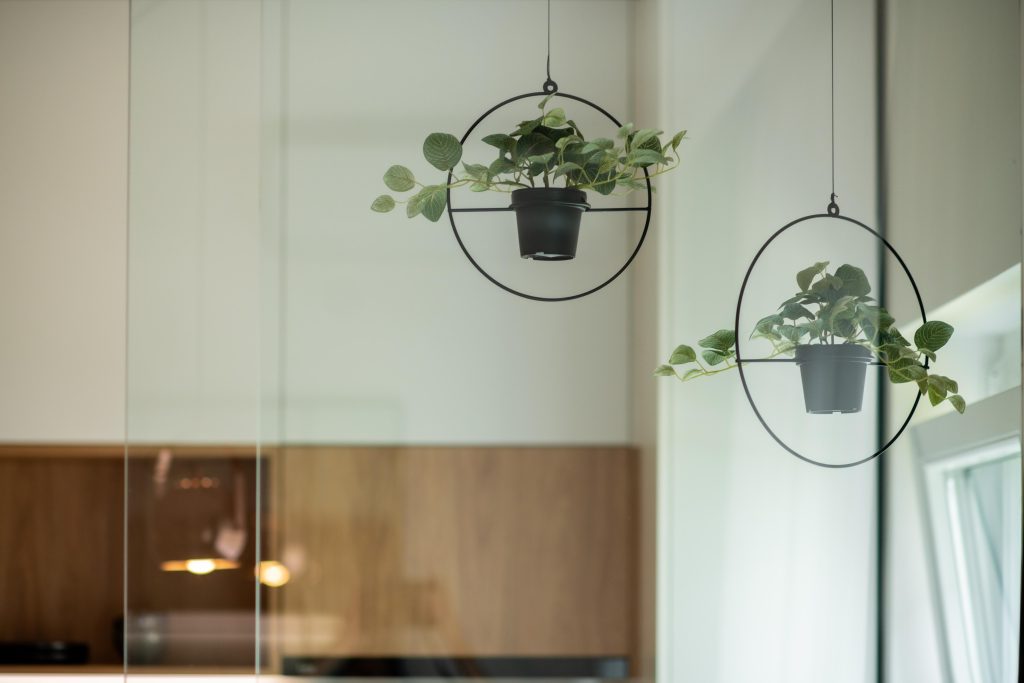
One of the most elegant tools is a glass partition. It creates a real boundary between functions while keeping sightlines and daylight intact. Instead of introducing a heavy opaque wall, you preserve openness and gain more order at the same time. In many of the projects highlighted by Dezeen, glass appears as exactly that kind of answer: separation without visual heaviness.
2. Furniture placement with intention
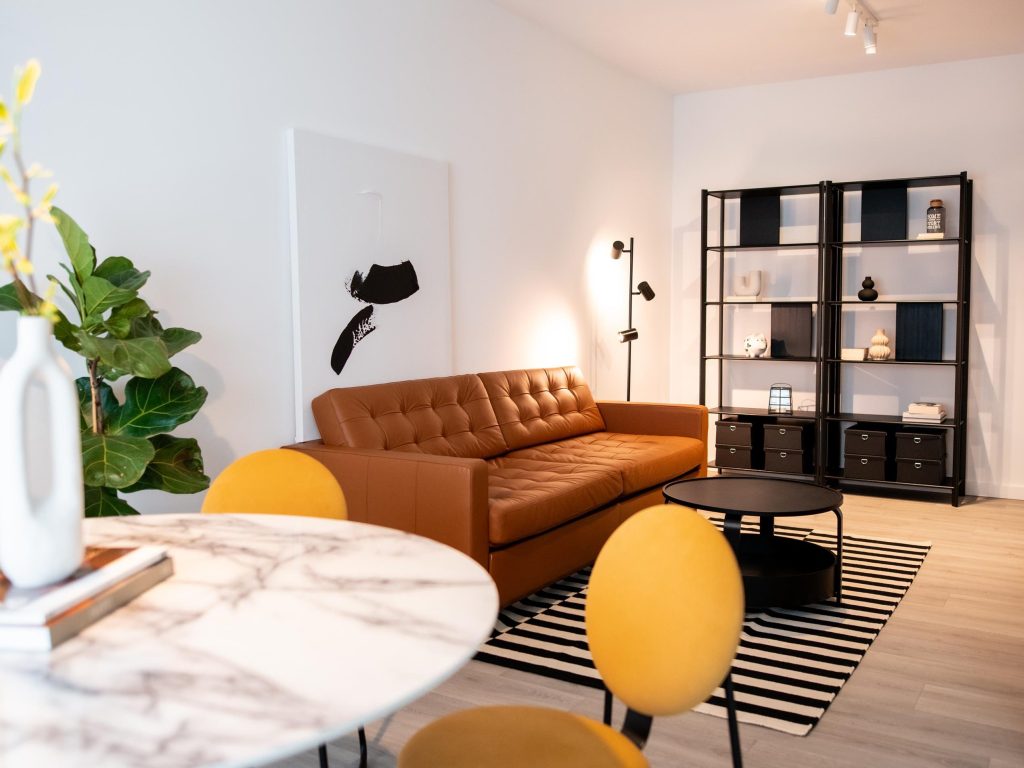
A zone is shaped not only by what it contains, but by how it is oriented. A sofa that visually closes the living area, a dining table properly anchored in its own axis, or open shelving used as a soft divider can all define a room within a room. Houzz repeatedly highlights furniture grouping as one of the most useful ways to structure an open-plan interior.
3. Rugs and lighting that clarify function
A well-scaled rug under the seating area immediately changes how the living space is perceived. In the same way, a pendant above the table or a track of spotlights following the kitchen run can establish hierarchy without any structural intervention. Homes & Gardens recommends this layered approach because lighting and textiles help create distinction in a subtle but highly effective way.
4. Cohesive materials, but not complete uniformity
A well-zoned home does not need harsh contrasts. In fact, it often works better when finishes stay within the same family while changing rhythm from one area to another. A warm wood kitchen front, a denser upholstery tone, or a different texture in the living area can suggest a shift in function without breaking the overall harmony.
How this appears in The Tulip Project
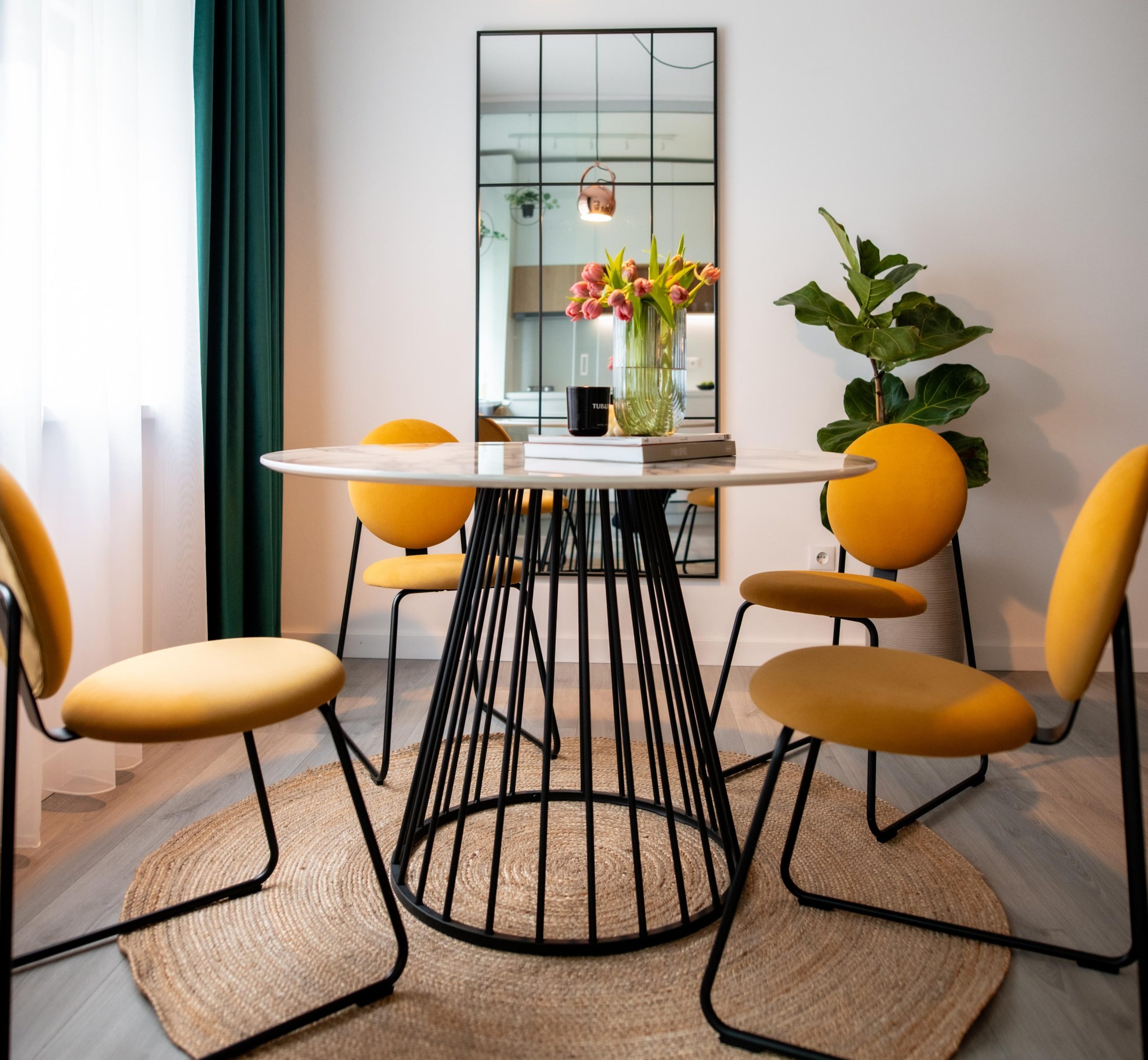
In The Tulip Project, zoning is achieved through restraint rather than dramatic gestures. In the kitchen area, the glass partition filters and structures the space without darkening it. In the dining and living areas, definition comes from the placement of the furniture, the rug, and the way each function is allowed enough breathing room.
That result matters. The apartment still feels open and airy, but it does not feel undefined. Each area has a clearer role, and the movement through the interior feels natural. This is the difference between a generic open-plan layout and one shaped with intention.
Final thought
Open-plan living is not disappearing, but it is becoming more refined. Instead of one large undifferentiated room, we are seeing more interiors that preserve openness while introducing smart boundaries. Glass partitions, intentional furniture placement, rugs, layered lighting, and carefully balanced materials can dramatically improve how a home feels.
When zoning is designed well, the space does not feel smaller. It feels clearer, calmer, and easier to live in. That is the real value of good interior design: not only that it looks beautiful, but that it supports daily life in a more natural way.
Sources
