
Layered Lighting and Authentic Materials: Two Design Directions Shaping Interiors
In 2026, the interiors that feel truly relevant are no longer the ones designed for quick visual impact alone. The stronger direction is toward spaces that work beautifully over time—spaces that feel good to live in, not just good to photograph. Across trend reports, residential projects, and hospitality concepts alike, two ideas keep showing up together: layered lighting and authentic materials.
This is not about applying trends as a decorative formula. It is about the relationship between atmosphere, function, and material expression. Light shapes how we perceive scale, warmth, rhythm, and depth. Materials bring tactile presence, visual weight, and a sense of permanence. When the two are considered as part of the same design logic, the result feels natural, cohesive, and genuinely livable.
That is also where the MiMa Design perspective fits in so well. A well-resolved interior is not built around one dramatic gesture. It comes from choices made with intention—proportions that feel right, textures that age well, and details that support everyday life. In living spaces, bedrooms, bathrooms, beauty interiors, and hospitality settings, light and material are not separate conversations. They are part of the same experience.
Why layered lighting matters more than a single statement fixture
One of the clearest takeaways from 2026 lighting coverage is that atmosphere cannot be solved by one striking ceiling fixture alone. Homes & Gardens points to a growing preference for layered lighting schemes where ambient, general, accent, and task lighting work together. That shift matters because it moves the conversation away from decoration and toward spatial experience.
In practical terms, a living room rarely feels complete when it depends on one central ceiling light. A more thoughtful scheme may include discreet ceiling lighting for overall illumination, a wall light or floor lamp for mood, and a table lamp to support reading or evening comfort. In a dining area, a pendant over the table can anchor the composition, but it works far better when supported by a softer background layer that keeps the room from feeling flat or overly formal after dark. In a bedroom, separate warm light sources create a calmer atmosphere than a single blanket wash of light ever could.
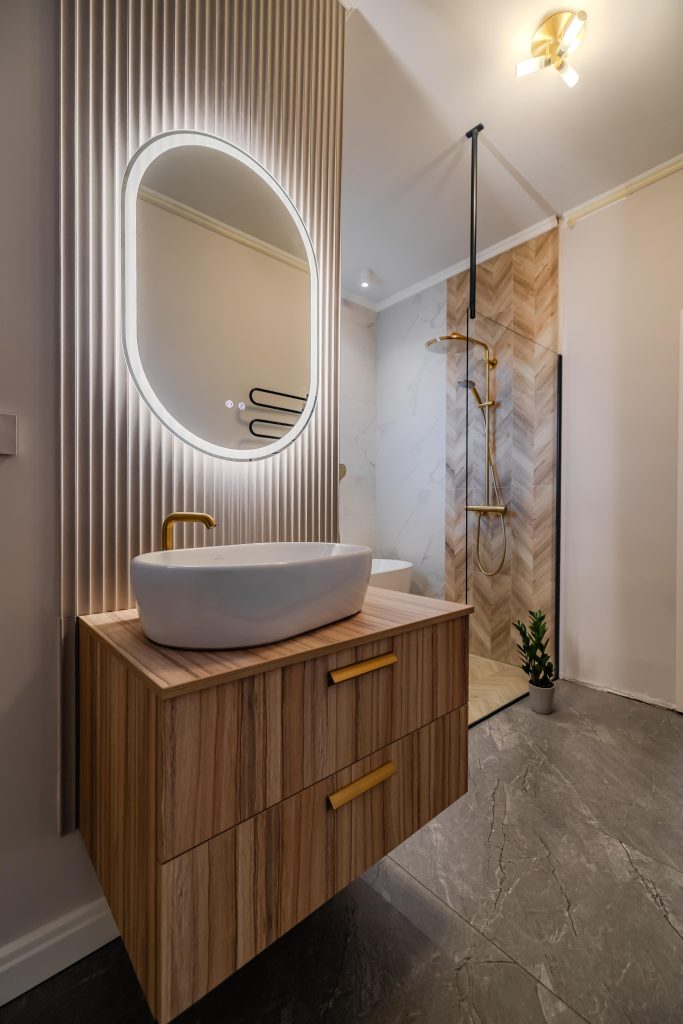
The same logic applies in bathrooms. According to NKBA’s 2026 Bath Trends Report, bathrooms are becoming more personal, more wellness-driven, and more connected to daily ritual. That means lighting needs to do more than illuminate surfaces—it needs to support comfort. Around the vanity, frontal or side lighting tends to be more flattering and functional than relying on a single overhead source above the mirror. Elsewhere in the room, a warm ambient layer can make the space feel calmer and more refined.
Seen this way, lighting is not just a technical requirement. It becomes a design material in its own right—one that shapes mood, highlights surfaces, and changes how the entire interior is read.
Sculptural fixtures and the texture of light
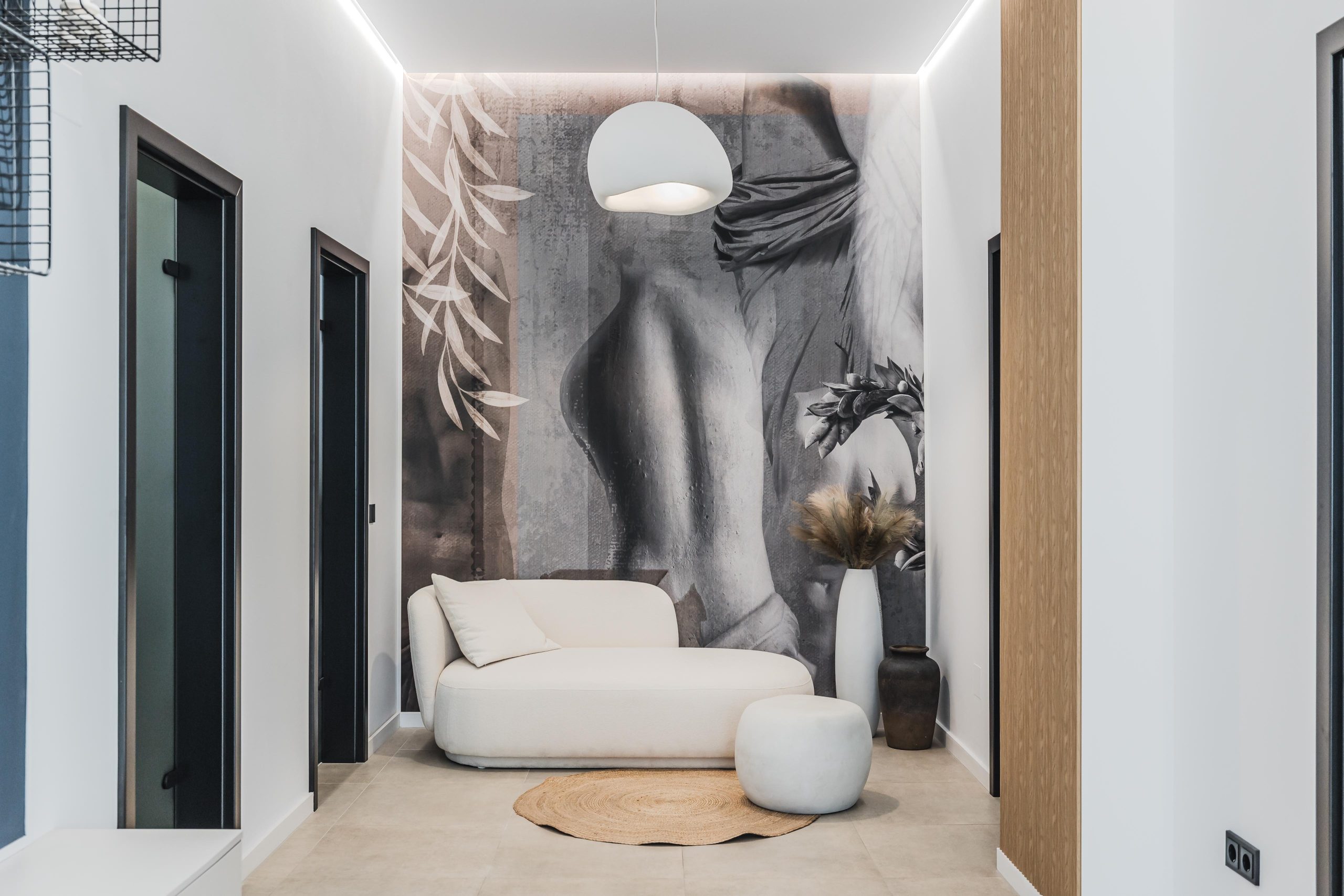
Alongside layered lighting, 2026 also brings a strong interest in fixtures with visual presence. Homes & Gardens and other design publications note the rise of sculptural pendants, organic silhouettes, and lighting pieces that help define a room rather than simply brighten it. But the appeal of these fixtures lies in restraint, not excess. A sculptural light works best when it supports the architecture and proportions of the room instead of overpowering them.
Context is everything here. A pendant with a strong shape can feel elegant and grounded when it relates to the surrounding finishes—timber tones, matte surfaces, brushed metal accents, or mineral textures. Without that relationship, it risks becoming an isolated statement. With it, the piece becomes part of the room’s rhythm.
In residential interiors, a sculptural fixture can define a dining table, kitchen island, stair void, or reading corner. In hospitality and beauty settings, it can do even more: it can set the tone of arrival, create softness at reception, or make a compact area feel memorable without becoming overly theatrical. The best pieces do not just attract attention. They support atmosphere.
Just as important is the texture of the light itself. Harsh lighting tends to flatten finishes. Diffused, well-controlled light is much better at revealing the grain of wood, the subtle relief of decorative plaster, the vertical rhythm of slatted wall detailing, or the softness of woven textiles. In that sense, a fixture is never only an object. It is also a tool for revealing every other material in the space.
Why authentic materials are moving back to the center of interior design
The second major direction is the return of authentic materials and finishes that do not pretend to be something else. Architectural Digest describes a more expressive yet more edited design language for 2026—one that blends sculptural forms and richer materials with a quieter, more livable sensibility. That aligns closely with the wider shift toward texture, tactility, and controlled craftsmanship seen across current design reporting.
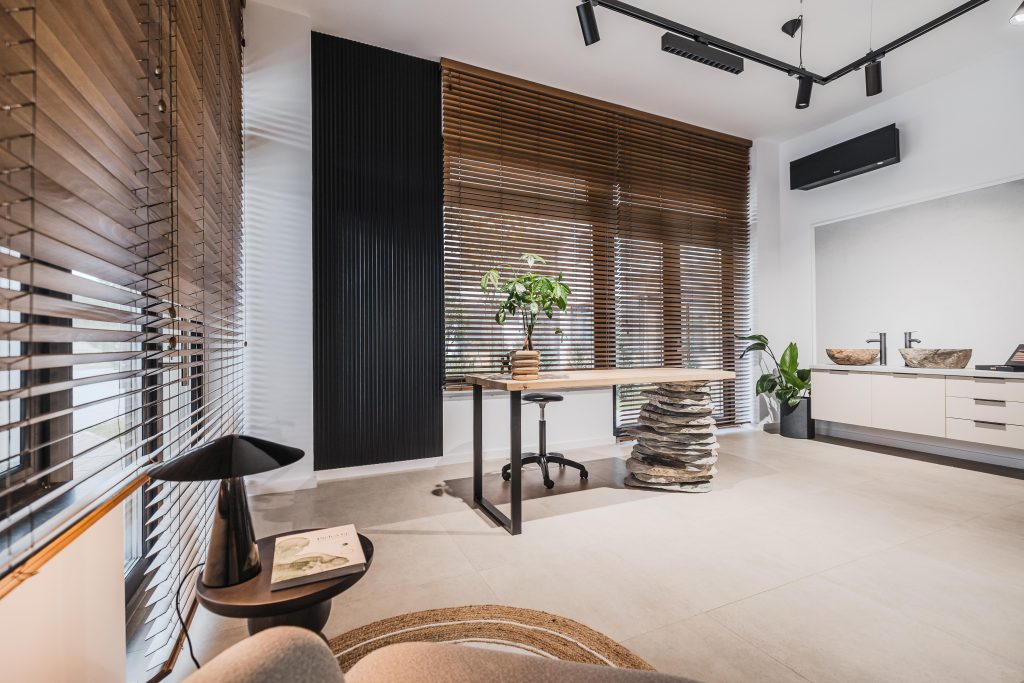
In practical terms, this means less interest in sterile, overly polished interiors and more interest in materials that gain character over time. Timber, especially species such as oak and walnut, brings warmth and visual stability. Natural stone introduces weight, depth, and a grounded quality that manufactured uniformity often lacks. Matte, satin, and brushed finishes continue to gain ground over high-gloss surfaces because they feel easier to integrate into interiors that are calm, layered, and durable in their appeal. NKBA’s 2026 reporting supports this direction as well: in bathrooms, matte, brushed, and satin finishes are preferred over polished ones, while wood-faced vanities are becoming more desirable than painted alternatives.
This should not be confused with a return to rustic excess. Contemporary interiors use natural materials in a more deliberate, edited way. A neutral envelope, engineered or layered wood flooring, a carefully placed stone surface, brushed brass hardware, or a feature wall with refined slatted detailing can create warmth without visual noise. The key is proportion. Good materials need room to breathe.
That is where the difference lies between trend-driven styling and an interior that lasts. Depth does not come from adding more and more texture. It comes from selecting the right textures and allowing them to support the same atmosphere.
How lighting and materiality create a coherent project together
These two directions become most powerful when they are considered together from the beginning of a project. Light reveals texture, and texture gives light something meaningful to interact with. A matte surface, a decorative plaster wall, a natural wood veneer, or a honed stone finish will all respond to lighting very differently than a flat, glossy, uniform surface. That is why a coherent interior does not treat lighting as a final technical layer. It uses lighting to shape the relationship between materials.
In residential work, the effect is immediate. In a living room, carefully positioned ambient lighting can bring out the depth of a wall finish and make timber furniture read warmer and more grounded. In a bedroom, dimmable layers and warm color temperature help textiles, matte finishes, and soft tonal palettes feel calmer and more nuanced. In a bathroom, the right balance of functional and ambient lighting can turn a simple composition of stone, glass, and suspended cabinetry into something that feels closer to a private wellness ritual than a purely practical room.
This relationship matters even more in beauty and hospitality spaces. Hospitality Net and WATG both point to emotional comfort, experiential value, and a stronger sense of retreat as defining priorities in contemporary hospitality design. That means a space can no longer rely on function or visual polish alone. It needs to create a feeling. A reception area lit too coldly and finished with hard, textureless surfaces may look clean, but it rarely feels inviting. A warmer composition—authentic materials, controlled lighting, better proportion—can immediately create calm, trust, and a stronger emotional connection.
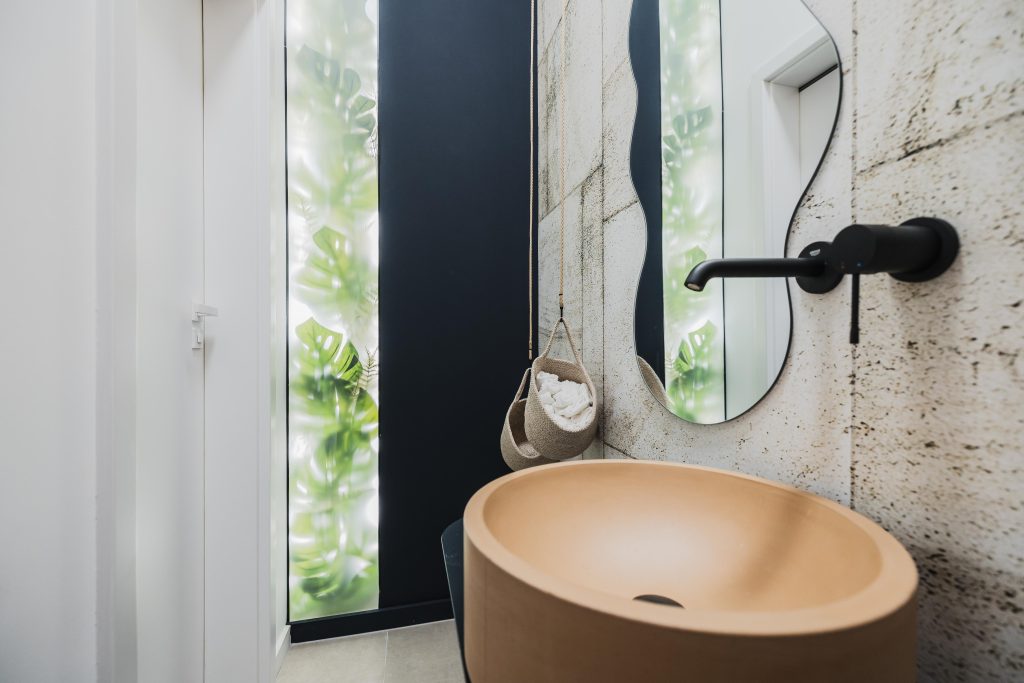
In other words, light and material need to tell the same story. If one moves in one direction and the other somewhere else, the project feels fragmented. When they support each other, the space feels resolved and memorable without trying too hard.
What is worth taking from 2026 trends—and what is not
There are several principles here worth keeping beyond the trend cycle itself. Layered lighting remains one of the most useful design decisions because it adds flexibility, comfort, and atmospheric depth. Authentic materials continue to matter because they bring tactility, visual richness, and a sense of lasting quality. Matte finishes, warm neutrals, restrained detailing, and subtle visual rhythm are all choices that tend to wear well over time.
What should be avoided is literal trend copying. A sculptural light chosen without regard for scale will not create atmosphere on its own. A mix of timber, stone, and metal used simply because it feels current will not guarantee coherence. Too many textures, too many accents, or too many references can easily overwhelm a space that really needed editing and clarity.
Trends are most useful when treated as a filter rather than a recipe. They can point toward a direction, but the right answer still depends on architecture, natural light, daily routines, and how people will actually inhabit the space.
Conclusion
In 2026, the interiors that feel convincing are not defined only by color palettes or statement pieces. The real difference lies in how lighting and materials work together. Layered lighting brings atmosphere, function, and flexibility. Authentic materials bring texture, balance, and a sense of visual longevity. Together, they create interiors that do more than impress at first glance—they continue to feel good over time.
From a MiMa Design point of view, that remains the essential measure of a successful project: choices made with intention, proportions that stay comfortable, and details that genuinely make a difference. If you want a space that feels coherent—not just attractive in a rendering—design always begins with the way life actually happens inside it.
Sources
1. Homes & Gardens — *7 lighting trends soon to be everywhere in 2026*
2. Architectural Digest — *“Neo Deco” Is the Designer-Approved Trend of 2026*
3. NKBA | KBIS — *2026 Bath Trends Report*
4. Hospitality Net / WATG — *Five Trends Shaping the Hospitality Landscape in 2026*
5. MiMa Trends Archive — *MiMa Design trend archive, 2026-W13*
